
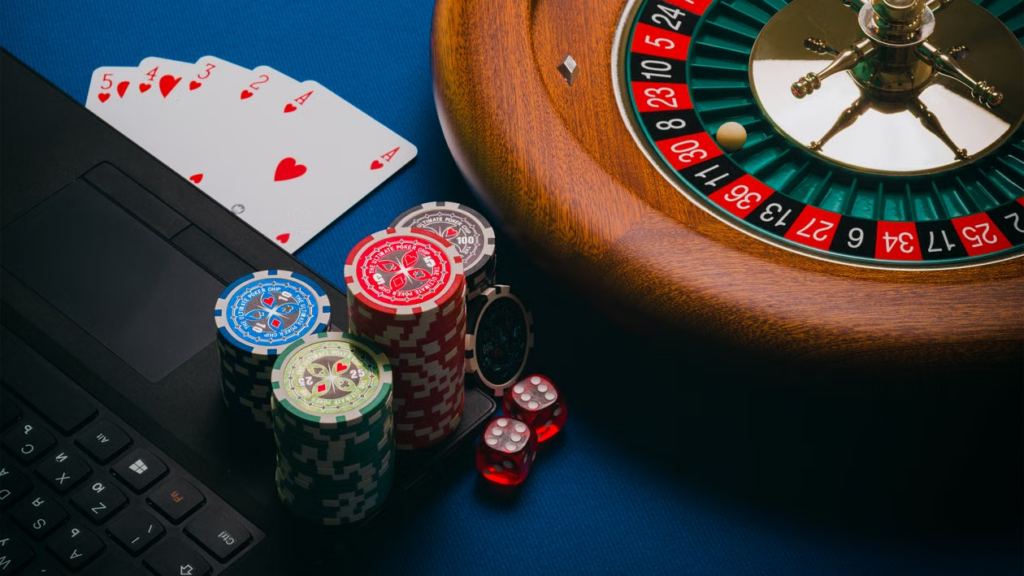
Well before computers, people were obsessed with predicting cards and dice. That drive laid the foundation for modern probability — the same basic ideas you’ll still find explained in online casino guides when looking at odds and risk. In fact, 17th-century gambling is what got mathematicians thinking about randomness in the first place, even if it wasn’t an established science back then.
A Dispute Between Two Mathematicians That Changed Science
It was 1654 when a French gambler named Chevalier de Méré came to Blaise Pascal with an odd little puzzle: if a game gets cut short, how do you fairly split the pot? Pascal couldn’t quite crack it alone, so he wrote to Pierre de Fermat.
Back and forth they went, and somewhere in that exchange of letters, probability theory was born. Neither man set out to found a new field of mathematics — they were just trying to settle a bet.
Decades later, Jakob Bernoulli picked up where they left off. He worked out something called the Law of Large Numbers — the idea that random results start to even out into predictable patterns the more times you repeat them. It sounds obvious now, but back then it was a genuine breakthrough. This law still explains why casinos almost always come out ahead in the long run.
From Salons to Scientific Treatises
During the 18th and 19th centuries, probability theory expanded beyond the card table. Pierre-Simon Laplace took probability into astronomy and population statistics. Around the same time, Abraham de Moivre worked out the math that modern statistics still runs on. His big contribution was the normal distribution — the bell curve economists, engineers, and doctors still rely on today.
Gamblers had a gut feel for the odds, but no real math to back it up. Mathematicians fixed that. Soon the formulas turned up everywhere — insurance, demographics, even physics. A science born from cards and dice ended up shaping how we calculate risk.
Probability in the Computer Age
The 20th century brought computers into the mix — now you could run millions of hands in seconds. No mathematician with pen and paper could touch that. Then John von Neumann came along with game theory, digging into how people make choices when they don’t know what’s coming.
Online platforms have directly inherited this tradition. Random number generators operate on the same principles once derived on paper; the only difference is the speed and scale of the calculations.
How the Theory Applies to Modern Games
Modern platforms, including MyBookie, build their casino games on the same mathematical laws used by Pascal and Bernoulli — though algorithms now perform the calculations in fractions of a second. Before sitting at a virtual table, it is useful to consider the factors that determine the probability of winning in popular games:
- calculating the expected value of a bet;
- the casino’s percentage advantage (house edge);
- frequency of specific combinations appearing;
- impact of the number of game rounds;
- relationship between risk and payout;
- randomness of the RNG;
- long-term statistical trends.
Knowing this stuff won’t win you the game. But it’s the difference between playing smart and just hoping for the best — and it’ll help you keep your budget in check too.
According to Statista, the total gross gaming revenue of commercial casinos in the US reached approximately $79 billion in 2025, with Nevada alone generating over $15 billion, figures that clearly show how deeply games based on probability are embedded in the nation’s economy.
Probability theory has come a long way, from two Frenchmen arguing over a card game to the algorithms running every app on your phone. It hasn’t eliminated chance. It’s just taught us how to understand it better and make smarter calls.
The same logic runs under every game of chance today. The only difference is that it’s not pen and paper anymore — it’s processors and neural networks doing the math faster than any mathematician ever could.