
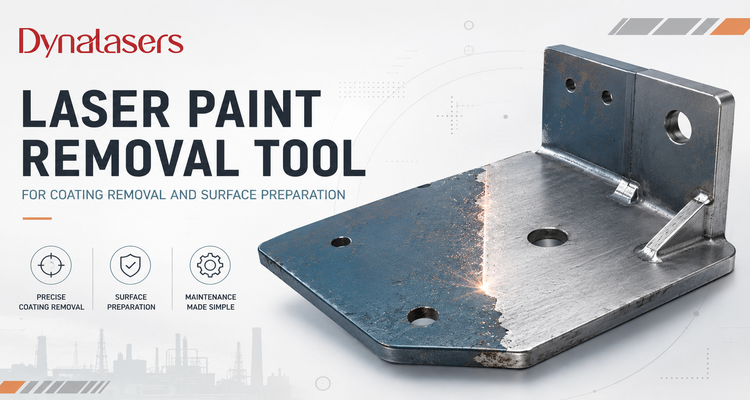
A laser paint removal tool helps strip old paint, coatings, rust, and oxides from metal with better local control and less secondary cleanup than grinding or sandblasting. But it’s not a cure‑all—results depend on coating type, base metal, thickness, heat sensitivity, safety setup, and the parameters you run. Always test on a small area first.
Laser Paint Removal Tool Comparison Table
|
Method |
Surface Control |
Waste |
Operator Handling |
Precision |
Best Use Case |
|
Laser paint removal |
High—targets specific zones |
Minimal vapor; needs fume extraction |
Trained operators, safety gear |
High—edges, seams, bolt holes |
Localized stripping, weld prep, repair patches |
|
Chemical stripper |
Moderate |
Chemical waste and rinse water |
PPE and chemical handling |
Moderate |
Complex shapes, small parts |
|
Grinding |
Low |
Dust, sparks, disc waste |
Physical effort, dust control |
Low—leaves marks |
Rough dressing, leveling |
|
Sandblasting |
Low |
Heavy dust and spent media |
Media handling, dust suppression |
Low |
Large areas, thick coatings |
A laser paint remover works best when you need precision and less abrasive residue, but it doesn’t replace all traditional methods. Chemical strippers still suit intricate parts, grinding handles weld dressing, and sandblasting covers big rough surfaces. Laser shines for edges, weld seams, repair zones, and any spot where you want to avoid blasting the whole part.
When Laser Paint Removal Makes Sense
You’ll find laser paint removal useful for metal repainting, equipment refurbishment, weld prep, and localized stripping on machinery covers, frames, tanks, and brackets. The big plus is treating only the area that needs work—say, a weld line or a damaged coating patch—instead of sandblasting an entire assembly.
That said, you have to check the coating, base metal, thickness, and heat sensitivity first. A laser that removes paint isn’t a one‑click solution; different coatings behave differently. Run a test patch before you commit.
Why Dynalasers Is Useful for Paint and Coating Removal

Dynalasers cleaning systems are built for actual shop and maintenance work. In practice, paint removal often comes with rust, oxide, weld prep, and surface treatment all mixed together. For anyone looking for a laser to remove paint, Dynalasers offers both continuous‑wave and pulsed options—your choice depends on coating thickness, cleaning area, base metal, heat tolerance, finish needs, and whether speed or control matters more.
Controlled Laser Surface Cleaning
Laser cleaning focuses energy on the coating layer, so you can clean selected spots—edges, flanges, bolt holes, repair zones—without mechanically treating the whole workpiece. That’s what makes laser surface cleaning useful for reducing grinding marks and abrasive residue. Still, you need to manage fumes, heat, reflected light, and fire risk with proper extraction, safety glasses, access control, and trained operators.
Suitable for Paint, Rust, and Oxide Removal
Most old parts carry a mix of paint, rust, oxide, and oil residue. Dynalasers systems support laser paint and rust removal on the same piece, and they can also clean oxide and weld discoloration under the right settings. But parameters change with layer thickness and surface condition—a laser paint stripping tool isn’t a one‑setting‑fits‑all device.
Portable Operation for Maintenance Work
Many jobs happen on installed equipment or large structures that can’t be moved. Portability matters as much as cleaning speed. Dynalasers systems are designed for teams moving between work areas and field jobs, letting you treat only necessary spots before welding or repainting—without hauling heavy parts to a fixed station.
Process Testing Support for Different Coatings
Coatings vary widely—thin paint, powder coats, thick industrial layers, rusted paint, primers, fillers. A laser paint stripping tool that works on one may need different settings on another. Always do a small‑area test on the actual workpiece to confirm cleaning speed, surface finish, fume behavior, and base metal reaction. That test helps avoid heat marks, discoloration, or incomplete removal.
Dynalasers Laser Paint Removal Options
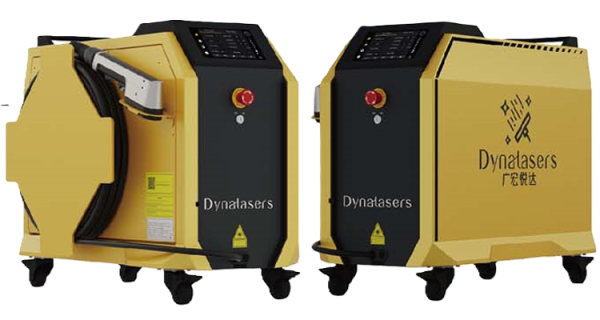
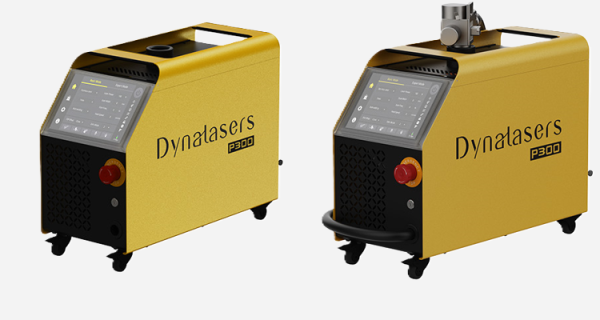
Both systems support laser coating removal but suit different workloads. The M75 continuous cleaner handles heavy coatings and large metal areas. The P300 pulsed cleaner offers finer control for sensitive surfaces.
M75 Continuous Laser Cleaner for Heavy Coating and Large Metal Areas
The Dynalasers M75 is a continuous‑wave laser cleaner with up to 1800 W output. It’s built for heavy paint, thick rust, oxide, and large surfaces like steel plates, machinery frames, welded structures, tanks, and ship parts. Continuous energy works well for big areas, but heat input is higher—so thin or polished metals and precision parts need careful testing.
P300 Pulsed Laser Cleaner for Controlled Paint Removal and Sensitive Surfaces
The Dynalasers P300 is a pulsed cleaner with lower heat input, designed for lighter paint, oxide, weld discoloration, mold residue, and high‑finish surfaces. It’s a good fit for thin parts, molds, and valuable components where you want to avoid heat buildup and discoloration. When precision matters more than raw speed, the P300 usually wins.
Important Notes Before Removing Paint with Laser
Before you start, confirm coating type, base metal, thickness, finish requirements, and heat sensitivity. Old paint may have mixed layers, primers, oils, or fillers that change how it reacts. Safety is non‑negotiable: laser paint removal creates fumes, sparks, and reflected light. You need fume extraction, wavelength‑rated laser safety glasses, restricted access, fire control, and trained operators. Always test on a small patch first—especially for coated, thin, or high‑value parts—to verify power, scan speed, focus, and cleaning width.
FAQs
Q1. Can a laser paint removal tool remove old coating?
A laser paint removal tool can strip old coating from suitable metals when coating and parameters match. Thick or layered coatings may need slower scanning or repeated passes. Test a patch first.
Q2. Is laser paint removal suitable for metal surfaces?
It works on carbon steel, stainless steel, aluminum, and many machine parts—but not automatically on every surface. Thin, polished, reflective, or heat‑sensitive metals require careful parameter testing.
Q3. What is the difference between laser paint removal and sandblasting?
Sandblasting uses abrasive impact for large rough areas. Laser paint removal is non‑contact, offers local control, and avoids media cleanup—but still needs fume extraction, laser safety, and skilled operation.
Q4. Why should users test before full‑area paint removal?
Testing confirms settings on the actual coating and base metal, preventing overheating, discoloration, incomplete removal, or surface damage. Different coatings often need different settings.
Conclusion
A laser paint removal tool gives maintenance and repair teams better control for stripping paint, coatings, rust, and oxides. Dynalasers M75 and P300 cover heavy removal and controlled cleaning—choose based on coating, base metal, area, safety, and testing. Results come from matching parameters to the real workpiece, not from guessing.