

Can You Code a Winning Blackjack Bot? A Look at AI and Game Strategy
The idea is a classic tech fantasy: writing a piece of code that can outsmart a system and generate a profit. From automated stock trading to cracking complex algorithms, the allure of building a “perfect” bot is a powerful motivator for programmers and tinkerers. So, it’s natural to wonder if this logic can be applied to the world of online casinos. Can you really code a bot to consistently win a game like blackjack?
The short answer is more complex than a simple yes or no. While building a functional blackjack bot is a fantastic programming exercise, deploying it successfully is a battle fought on two fronts: mathematical strategy and sophisticated cybersecurity.
So, you’ve got your IDE open and a pot of coffee brewing. What’s the first hurdle in programming a digital card shark? It’s not the code itself, but the logic behind it.
The Foundation: Translating Basic Strategy into Code
At its core, blackjack is a game of solved probabilities. For every possible combination of your hand and the dealer’s visible card, there is one mathematically optimal move: hit, stand, double down, or split. This decision tree is known as a “basic strategy,” and it’s the absolute bedrock of any effective blackjack-playing entity, human or machine.
Translating this into code is a relatively straightforward programming challenge. You can implement it as a large set of “if-else” statements or, more elegantly, as a lookup table or dictionary. The bot needs to:
1. Read the current game state (its own cards, the dealer’s upcard).
2. Calculate its hand’s total value, correctly handling Aces as 1 or 11.
3. Consult the basic strategy matrix to find the correct action.
4. Execute that action.
Implementing a perfect basic strategy can reduce the house edge to as little as 0.5%, but mastering the nuances of blackjack strategy is the first, non-negotiable step for any human or machine player. The real challenge isn’t just coding the rules but doing so in a way that can interface with a live online game, often by reading screen data or tapping into an API, if one even exists.
A bot that just follows a chart is predictable. To truly gain an edge, many turn to more advanced techniques, which bring us into the realm of machine learning.
Leveling Up: Can AI and Machine Learning Beat the System?
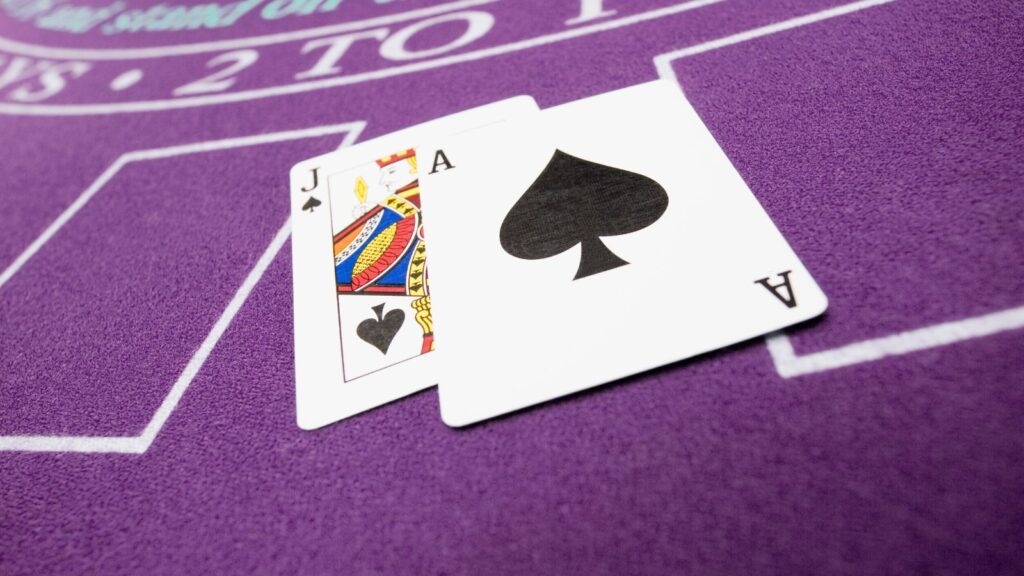
A rule-based bot is only as good as the rules you give it. This is where the concept of Artificial Intelligence, specifically reinforcement learning (RL), enters the picture. Instead of feeding the bot a strategy chart, you would create a simulation where the bot learns by playing millions or even billions of hands. It gets a positive reward for a win and a negative one for a loss, gradually teaching itself the optimal strategy from scratch.
This approach is powerful and has been used to master far more complex games like Go and Chess. However, for blackjack, it faces a few key problems:
- The Outcome is Already Known: An RL model will likely spend immense computational resources just to independently “discover” the same basic strategy that already exists.
- Card Counting is Mostly Obsolete Online: The most famous advantage-play technique, card counting, relies on tracking cards dealt from a finite shoe. Most online casinos use a Continuous Shuffling Machine (CSM) that randomizes the deck after every single hand, rendering card counting completely ineffective.
- The House Edge Persists: Even with perfect play, the fundamental rules of blackjack ensure the house retains a slight edge over the long run. An AI can’t change the math of the game itself.
For readers who want a deeper breakdown of blackjack strategy, house edge, and how these systems work in practice, detailed explanations can be found on https://www.blackjackinsight.com.
The Digital Arms Race: Casino Bot Detection
Online casinos are technology companies. They invest heavily in security measures designed to detect and block automated players. This is where the project shifts from a game theory problem to a cybersecurity challenge. Beating the game is one thing; avoiding detection is another.
Casinos use a multi-layered approach to spot bots:
- Behavioral Analysis: A human player has tells. They take breaks, their decision time varies, and their bet sizes might change based on emotion. A simple bot is unnervingly consistent. It might play for 24 hours straight, make decisions in exactly 500 milliseconds every time, and never deviate from its betting pattern. These anomalies are red flags.
- Input Tracking: Modern security systems can track mouse movements, click patterns, and typing cadence. A bot that instantly snaps its cursor to the “Hit” button without any of the subtle, curved movements of a human hand is easily identifiable. More advanced bots try to mimic human behavior, but it’s incredibly difficult to fake perfectly.
- Digital Fingerprinting: Your browser, operating system, screen resolution, and IP address create a unique fingerprint. Casinos use this to detect players using virtual machines, remote desktops, or other tools commonly employed to run bots.
Given these hurdles, is the entire project just a fun but futile exercise in coding?
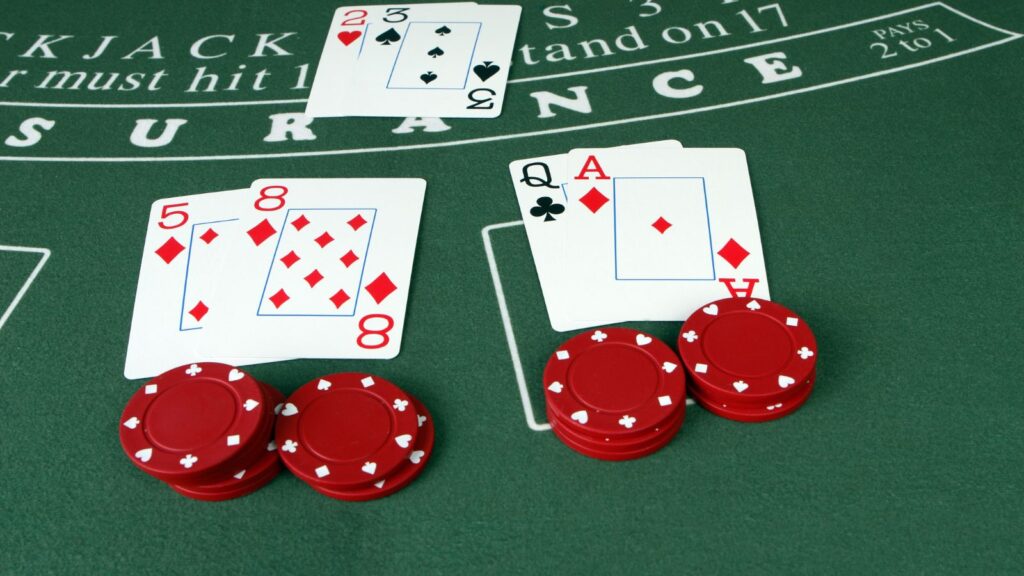
The Verdict: A Fun Project, not a Get-Rich-Quick Scheme
Building a blackjack bot is an exceptional educational project. It teaches you about rule-based logic, probability, game state management, and potentially even AI and machine learning. If you add the challenge of evading detection, it becomes a fascinating exercise in cybersecurity and reverse engineering.
However, as a tool for making money, it’s almost certainly doomed to fail. The mathematical edge is against you, and the casino’s security teams are actively hunting for you. Attempting to use a bot on a real-money site is a direct violation of their terms of service, which will lead to your account being banned and any funds confiscated. Think of it as a digital puzzle to solve for the fun of it, not a key to a vault.