
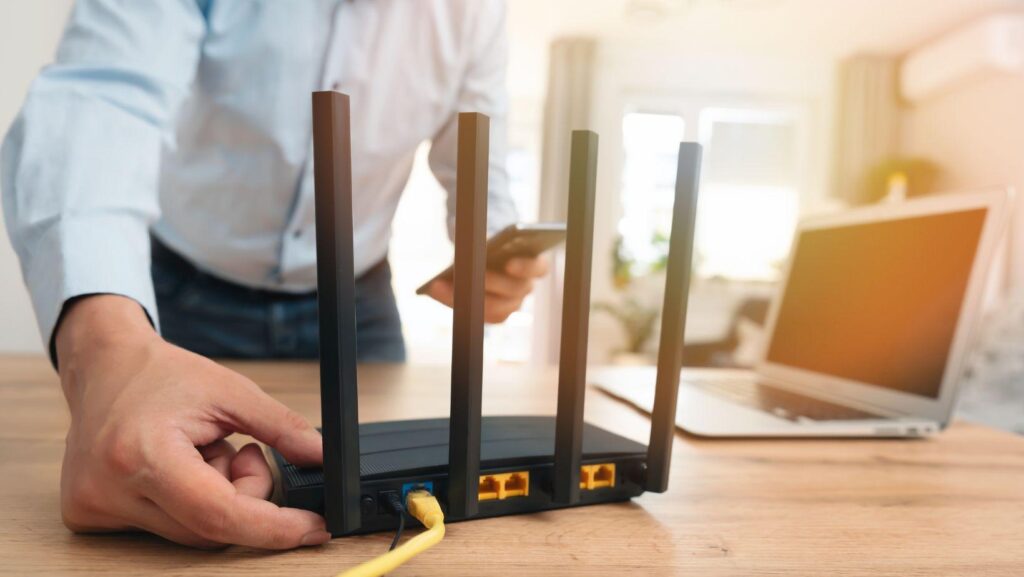
The average household now runs more connected devices than ever. Laptops, phones, smart TVs, game consoles, security cameras, voice assistants, and even appliances all compete for bandwidth. Picking the right internet connection is no longer just about the lowest monthly bill. It’s about finding a service that keeps everything running smoothly, reliably, and without headaches.
In 2026, most households will choose between three main options: fixed wireless, cable, and fiber. Each has clear strengths and trade-offs. Here’s how they compare and which one fits your devices and lifestyle best.
How Each Technology Works
Fiber:
Sends data as light pulses through glass strands. It’s the most advanced wired technology and offers very high speeds and low latency. The catch is availability: fiber needs physical lines run to your home, and many neighborhoods still don’t have it.
Cable
The internet uses the same coaxial lines that carry cable TV. It’s widely available and offers solid download speeds. Because bandwidth is shared with nearby households, performance can dip during peak hours.
Fixed wireless
Delivers internet through cellular networks to a gateway inside your home, which then creates your Wi-Fi network. There’s no line to install, and setup is usually as simple as plugging in a device. Newer gateways can even connect to more than one carrier network, which improves reliability.
Side-by-Side Comparison
|
Feature |
Fiber |
Cable |
Fixed Wireless |
|
Typical download speeds |
300 Mbps – 2+ Gbps |
100 Mbps – 1 Gbps |
100 – 400+ Mbps |
|
Upload speeds |
Symmetrical (same as download) |
Much lower than download |
Moderate |
|
Latency |
Very low |
Low to moderate |
Low to moderate |
|
Installation |
Professional, often with drilling |
Professional or self-install with existing lines |
Plug-and-play, self-install |
|
Availability |
Limited, mostly urban areas |
Wide |
Wide and growing |
|
Contracts |
Often required or promotional |
Common, with price hikes after promo |
Often no contract |
|
Portability |
None |
None |
Can move with you |
|
Price range |
Mid to high |
Mid, rising after promos |
Low to mid |
Note: Actual speeds and pricing vary by provider and location. Always check availability at your address.
Which One Fits Your Devices?
Heavy streamers and gamers
If your household streams 4K video on several screens or plays competitive online games, latency and consistency matter most. Fiber is the gold standard here. Cable and modern fixed wireless can also handle multiple HD and 4K streams with ease. For most families, the difference only shows up at the extreme end of use.
Smart home enthusiasts
Smart devices don’t need much bandwidth each, but they need a connection that’s always on. Security cameras, smart locks, and alarm systems can’t afford downtime. Fixed wireless services with multi-carrier redundancy have an edge here, since they can switch networks automatically if one has trouble. Cable and fiber outages, by contrast, often mean waiting for a repair crew.
Remote workers and creators
Video calls, cloud backups, and large file uploads depend on upload speed. Fiber’s symmetrical speeds make it ideal for content creators. Cable’s limited upload capacity can become a bottleneck when several people are on video calls at once. Fixed wireless sits in the middle and works well for most remote work.
Home-based and small businesses
If you run a business from home, or a small shop, studio, or office, uptime and flexibility become non-negotiable. A dropped connection can mean missed sales, frozen point-of-sale systems, or offline security cameras. Many owners now look at fixed wireless internet built for businesses as a primary connection or a backup, because it installs in minutes and doesn’t depend on a single wired line.
Renters and frequent movers
This is where fixed wireless clearly wins. No installation appointments, no early termination fees, and no landlord approval for drilling. When you move, your internet comes with you, provided the new address has coverage.
Hidden Costs to Watch
Monthly price is only part of the story. Before committing, check for:
- Installation fees: These are common with fiber and cable.
- Equipment rental: Some providers charge monthly for modems and routers.
- Promotional pricing: Introductory rates can jump significantly after 12 months.
- Data caps: Some plans still limit usage or slow speeds after a threshold.
- Early termination fees: Contracts can make switching expensive.
Fixed wireless providers often keep pricing simpler, with flat monthly rates and no contracts. Still, always read the fine print.
The Verdict
There’s no single “best” internet for everyone in 2026. It depends on what’s available at your address and how your household uses its devices.
- Choose fiber if it’s available and you need maximum speed and symmetrical uploads.
- Choose cable if fiber isn’t an option and you want wide availability with strong download speeds.
- Choose fixed wireless if you value easy setup, flexibility, no contracts, and built-in redundancy for always-on devices.
As homes keep adding smart devices and more people work from home, reliability and flexibility matter as much as raw speed. Before you sign anything, compare your options, check coverage, and choose the connection that fits how you actually live.