
Picture this: a technician spends hours diagnosing a failed industrial power supply, only to discover the replacement transistor installed last month was a counterfeit that never met its rated specifications. The repair cycle begins again, downtime stretches, and frustration mounts. Scenarios like this play out daily in workshops and maintenance facilities around the world, and they almost always trace back to one root cause — unreliable component sourcing.
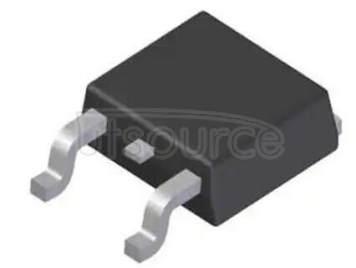
High voltage bipolar transistors, such as those meeting the transistor 600V 4A specification, are workhorses in power electronics. They appear in switching power supplies, motor drives, inverters, and countless industrial control systems. When these components fail or underperform, the consequences ripple outward: damaged boards, extended equipment downtime, and costly repeat repairs.
Yet sourcing these parts reliably remains one of the most persistent challenges technicians face. Counterfeit components flood the market, specifications get mislabeled, and supply chain disruptions leave repair teams scrambling. This article is designed to cut through that complexity. By identifying the most common sourcing pitfalls and offering practical, actionable strategies to avoid them, it equips technicians with the knowledge needed to source high voltage transistors confidently, keep repair timelines tight, and ensure the long-term reliability of every device they service.
Understanding High Voltage Bipolar Transistors and the 600V 4A Specification
Bipolar junction transistors (BJTs) operate by using a small base current to control a much larger collector current, making them ideal for amplification and switching applications. In high-voltage environments, these transistors must withstand substantial electrical stress without breaking down. Power electronics systems — from industrial motor drives to switching regulators — demand components engineered specifically for elevated voltage conditions, where thermal management and breakdown thresholds directly determine circuit longevity. Choosing a transistor that merely approximates the required specification is not a viable shortcut; the margin between rated performance and actual operating conditions can be razor thin, and any deviation invites premature failure.
The two defining parameters, voltage rating and current rating, work together to establish a transistor’s safe operating area. When either limit is exceeded, even briefly, the junction can suffer irreversible damage — sometimes catastrophically. Technicians sourcing replacements must treat these numbers as hard boundaries, not rough guidelines, because a component that fails under load rarely fails alone. It often takes surrounding circuitry with it, multiplying repair scope and cost.
What Does 600V 4A Mean for Your Projects?
A transistor 600V 4A rating means the device can block up to 600 volts across its collector-emitter junction and conduct continuous collector currents up to 4 amperes. In practical terms, this positions it squarely in applications like offline switching power supplies, electronic ballasts, and small motor controllers, where mains-derived voltages must be switched efficiently. For technicians repairing such equipment, confirming both ratings against the original schematic before ordering a replacement is non-negotiable — substituting a 400V-rated part into a 600V circuit, for instance, creates an immediate reliability hazard.
The Role in Power Electronics and System Reliability
High voltage bipolar transistors manage energy conversion at the heart of power electronics systems, switching current on and off thousands of times per second to regulate voltage and deliver clean power to downstream loads. When a substandard component enters this role — whether counterfeit, mislabeled, or simply inferior — switching losses increase, thermal runaway becomes likely, and system reliability collapses. For technicians, the downstream consequence is straightforward: a repair built on an unreliable transistor is not a completed repair. It is a deferred failure, and sourcing the right part from the start is the only way to break that cycle.
Common Pitfalls When Sourcing Transistor 600V 4A Components
Even experienced technicians fall into predictable traps when sourcing high voltage bipolar transistors, and the consequences are rarely minor. The four most damaging pitfalls — counterfeit components, mislabeled specifications, unreliable suppliers, and supply chain delays — each carry distinct risks that compound repair costs and stretch downtime unnecessarily.
Counterfeit transistors represent the most dangerous threat. The global electronics gray market floods distribution channels with parts that carry legitimate-looking markings but fail to meet rated performance. A transistor labeled as a 600V 4A device may actually break down at 350V under load, destroying the board it was meant to protect. These fakes often pass casual visual inspection, making them particularly insidious in high-pressure repair environments where technicians are moving quickly.
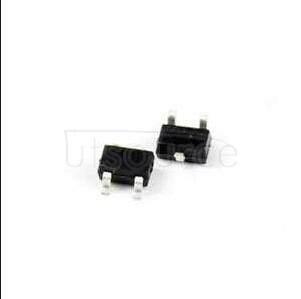
Mislabeled specifications create a subtler but equally costly problem. Distributors operating outside authorized channels sometimes relabel lower-rated parts to fill orders for harder-to-find specifications. A technician who orders based on part number alone, without cross-referencing the actual datasheet parameters, may install a component that operates within normal conditions for weeks before thermal stress exposes the mismatch — often at the worst possible moment.
Unreliable suppliers introduce inconsistency at scale. A vendor offering attractive pricing but lacking quality control processes may ship genuine parts one month and substandard substitutes the next. Without traceability, technicians have no way to distinguish a reliable batch from a problematic one until failures begin accumulating in the field.
Supply chain delays compound all of these issues. When critical transistors are backordered or sourced through slow channels, repair teams face pressure to accept whatever is available — a dynamic that counterfeit distributors exploit deliberately. Planning ahead and understanding lead times for specific components is not optional; it is a core part of sourcing strategy.
Identifying Counterfeit Bipolar Transistors
Several physical and functional warning signs point to counterfeit transistors before installation. Inconsistent font weight or spacing in part markings, packaging that lacks lot codes or date codes, and unusual surface texture on the component body are common indicators. Functional red flags emerge during basic testing: if a transistor’s measured gain (hFE) falls far outside the datasheet range, or if leakage current is abnormally high at room temperature, treat the part as suspect. Purchasing only from authorized distributors with full traceability documentation is the most reliable defense against counterfeits entering your repair workflow.
Specification Mismatches and Their Dangers
Installing a transistor with even a slightly incorrect voltage or current rating can trigger cascading failures. A 400V-rated part in a 600V circuit will likely survive initial power-on but fail unpredictably under peak load or transient conditions. To avoid this, always download the datasheet directly from the manufacturer’s website using the exact part number from the original schematic — never rely solely on a distributor’s product description. Cross-check collector-emitter voltage (VCEO), continuous collector current (IC), and power dissipation (PD) before ordering. Part number suffixes often indicate package or grade variations that affect ratings in ways a quick search will miss.
Practical Solutions for Reliable Sourcing of High Voltage Transistors
Reliable sourcing starts before the purchase order is placed. The first step is verifying supplier credentials — confirm that any distributor you consider holds authorized status with the original manufacturer. Authorized distributors maintain direct supply chain relationships, which means full traceability from factory to your workbench. This single criterion eliminates the majority of counterfeit risk before a single part is inspected. For transistor 600V 4A components specifically, manufacturers like ON Semiconductor, STMicroelectronics, and Toshiba publish authorized distributor lists on their websites, making verification straightforward. Platforms such as UTSOURCE, which specialize in automation accessories and electronic components, can also serve as a useful reference point when cross-checking part availability and specifications across multiple sources.
Once supplier credentials are confirmed, cross-referencing datasheets becomes the next critical action. Download the datasheet directly from the manufacturer using the exact part number from the original schematic. Verify VCEO, IC, PD, and hFE ranges before finalizing any order. Distributor product pages occasionally contain errors or omit critical parameters — the manufacturer’s datasheet is always the authoritative source. When evaluating potential substitutes, treat any parameter deviation as a disqualifying factor unless the original equipment manufacturer explicitly approves the cross-reference.
Physical inspection upon receipt adds another layer of protection. Check for consistent laser-etched or printed markings, verify that lot codes and date codes are present on packaging, and compare the component body finish against manufacturer reference images. Functional testing with a transistor tester or curve tracer to confirm gain and leakage current against datasheet values catches any remaining issues before installation. Maintaining a simple receiving log — recording supplier, batch number, and test results — creates traceability that proves invaluable if field failures emerge later.
Step-by-Step Guide to Verifying Component Authenticity
Follow this sequence for every high voltage transistor received: First, confirm the supplier’s authorized distributor status through the manufacturer’s website before ordering. Second, upon receipt, compare packaging markings — part number, date code, lot code, country of origin — against manufacturer documentation. Third, inspect the component body for uniform surface texture, consistent marking depth, and correct lead finish. Fourth, test electrically using a component tester: measure hFE and confirm it falls within the datasheet-specified range, then check collector-emitter leakage (ICEO) at room temperature. Any reading significantly outside specification warrants rejection and supplier notification. Fifth, document results in a receiving log tied to the purchase order for future reference.
Building Relationships with Trusted Suppliers
Long-term supplier relationships deliver advantages that one-off purchases cannot. A distributor who knows your typical component needs can flag availability issues proactively, reserve stock during shortages, and expedite orders when urgent repairs arise. To evaluate a potential long-term partner, request references from similar technical customers, ask about their counterfeit prevention programs, and confirm whether they participate in industry anti-counterfeiting initiatives like ERAI or IDEA. Start with a trial order, verify the components thoroughly, and document the experience before committing to larger volumes. Over time, a reliable supplier becomes an extension of your sourcing strategy — one who understands the criticality of components like the transistor 600V 4A and treats order accuracy accordingly.
Addressing Technician Needs: Ensuring Availability and Quick Delivery
Even the most rigorous sourcing process breaks down when the right component simply isn’t available when needed. For high voltage bipolar transistors like the transistor 600V 4A, availability gaps translate directly into extended equipment downtime — a cost that often exceeds the component’s value many times over. Addressing this reality requires a proactive approach that combines smart inventory practices, diversified sourcing channels, and a clear understanding of lead times before a repair emergency occurs.
Start by mapping the transistors that appear most frequently in your repair work. For each high-frequency component, maintain a modest buffer stock — enough to cover two or three typical repair cycles without reordering. This reserve eliminates the most common availability crunch: the urgent repair that stalls because a single part is backordered. Local distributors deserve a place in this strategy alongside online platforms. While online channels often offer broader selection, a local authorized distributor can provide same-day pickup for critical components, a capability that no shipping service can fully replicate when a production line is down.
When emergency sourcing becomes unavoidable, having pre-vetted backup suppliers shortens response time dramatically. Identify at least two authorized distributors for your most critical transistor specifications in advance, confirm their typical stock levels, and save their expedited ordering contacts. Online platforms from major authorized distributors frequently offer express shipping options that can deliver within one to two business days — but only if the account is already established and the part number is confirmed before the crisis hits. Planning these logistics during routine periods, not during emergencies, is what separates efficient repair operations from reactive ones.
Strategies for Maintaining Component Availability
Effective inventory management begins with repair frequency data. Track which transistors appear in your repair logs most often and use that history to set minimum stock thresholds. For a transistor 600V 4A used regularly in switching power supply repairs, keeping four to six units on hand provides a practical buffer without tying up excessive capital. Review stock levels monthly and reorder before hitting the minimum — not after. Coordinate with your primary supplier to understand their typical replenishment cycles, and schedule routine orders to align with those cycles. This rhythm prevents the reactive scramble that leads technicians toward unverified suppliers during shortages.
Leveraging Quick Delivery Options in Power Electronics
Authorized distributors increasingly offer tiered shipping options designed for urgent repair scenarios, including next-day and same-day dispatch from regional warehouses. To use these services effectively, establish accounts with at least two certified distributors before you need them — account setup during an emergency wastes critical time. When placing urgent orders, confirm real-time stock availability directly with the distributor rather than relying on website inventory figures, which can lag actual warehouse counts. For recurring high-priority repairs, ask your distributor about reservation programs that hold stock against your account. These arrangements ensure that supply chain disruptions affecting the broader market don’t cascade into your repair workflow, keeping operational downtime to a minimum.
Smarter Sourcing for Lasting Repair Reliability
Sourcing high voltage bipolar transistors reliably is not a peripheral concern — it sits at the center of every successful repair outcome. The pitfalls covered in this article, from counterfeit components that masquerade as genuine parts to specification mismatches that trigger cascading failures, share a common thread: they are preventable with the right knowledge and habits in place. Verifying supplier credentials, cross-referencing manufacturer datasheets, inspecting components upon receipt, and building relationships with authorized distributors are not extra steps. They are the foundation of repair work that holds up over time.
Availability and delivery speed matter just as much as authenticity. Maintaining a modest buffer stock of frequently used components like the transistor 600V 4A, establishing accounts with multiple authorized distributors before emergencies arise, and understanding lead times in advance transforms reactive scrambling into controlled, efficient sourcing. These practices reduce downtime, protect the equipment you service, and preserve your reputation as a technician whose repairs last.
The path forward is straightforward: apply these insights consistently, starting with your next component order. Treat every sourcing decision as an investment in the reliability of the finished repair — because that is exactly what it is. When the right part reaches the right circuit, installed with confidence in its authenticity and specifications, the repair cycle ends where it should. Apply these strategies daily, and unreliable sourcing stops being a recurring problem and becomes a challenge you have already solved.